Type
Academic Work
Classroom print design projects developed through design coursework and production-focused assignments.
Academic Print Products
A collection of classroom-based print design projects exploring posters, brochures, editorial layouts, manuals, and display materials through typography, layout hierarchy, image composition, and print production awareness.
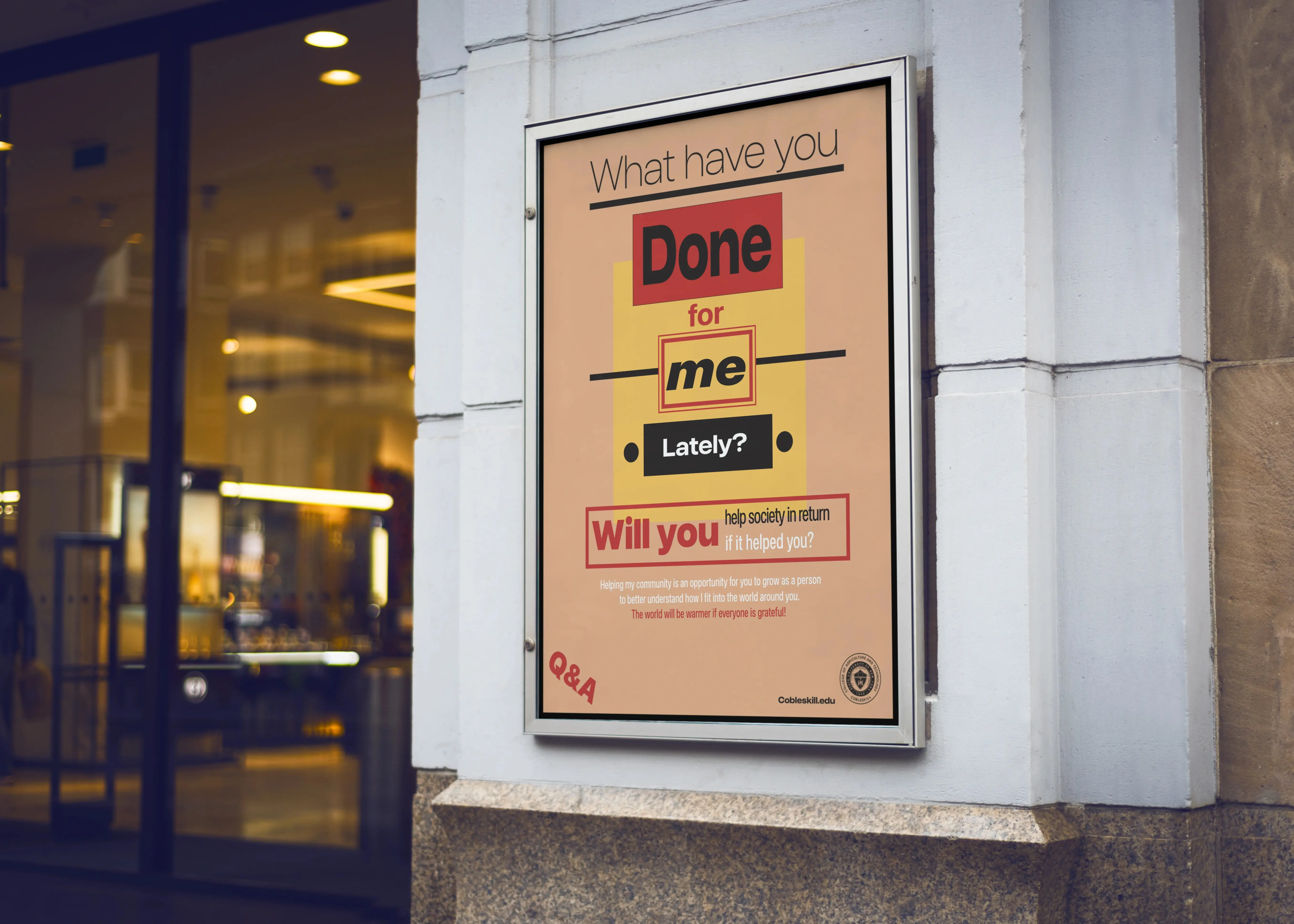
This page presents print products created in coursework, showing how different formats require different approaches to scale, readability, hierarchy, and production details.
Type
Classroom print design projects developed through design coursework and production-focused assignments.
Formats
A range of printed formats including editorial layouts, promotional posters, manuals, and banners.
Tools
Designed with Adobe Illustrator, InDesign, and Photoshop for layout, image editing, and print preparation.
Focus
Focused on visual hierarchy, spacing, typography, file setup, resolution, margins, and readability.
This collection brings together print design assignments created during my design courses. The works are not presented as a single client project, but as a focused record of my classroom practice in layout, typography, image composition, and print communication.
Each piece required a different design approach. Posters needed immediate visual impact, brochures and manuals needed clear reading flow, and large-format banners needed strong contrast and simplified messaging for distance viewing.
Together, these projects show my understanding of how print design moves from digital layout to physical output.
The main purpose of these projects was to practice how design decisions change across different physical formats. A poster, a manual cover, an editorial spread, and a roll-up banner cannot use the same layout logic.
I focused on spacing, scale, alignment, type hierarchy, and image placement so each piece could feel organized and readable in its intended format.
Print design needs more than a strong visual idea. It also requires attention to resolution, margins, bleed, cropping, viewing distance, and how the final piece will be experienced after production.
These assignments helped me connect creative layout decisions with real production considerations.
The collection highlights core print design skills that support clear visual communication and production-ready presentation.
01
Organized information with grids, spacing, alignment, and proportion to create readable compositions across different print formats.
02
Practiced type pairing, hierarchy, contrast, line spacing, and text flow to support both quick scanning and longer reading.
03
Considered production details such as margins, bleed, image quality, cropping, color contrast, and final viewing distance.
This project explores editorial design through the creation of a complete book cover system, including the front cover, spine, and back cover.
Typography, scale, and color contrast were used to establish hierarchy and communicate the tone of the publication.
The final design demonstrates visual organization, readability, and print-focused thinking.
A selected group of print assignments showing poster design, editorial layout, manual cover design, brochure presentation, and large-format display design.
These classroom projects helped me develop practical print design skills across different formats. The collection demonstrates my ability to organize information, build visual hierarchy, prepare layouts for physical output, and design printed materials that are both expressive and readable.
01
Stronger layout hierarchy
02
Better print-format awareness
03
Clearer visual communication